Business License

Which Steam Trap Should You Choose for Your System?
A steam trap is a small component that plays an outsized role in your steam system's efficiency, safety, and operating cost. Choose the wrong one, and you risk waterlogging, water hammer, or continuous steam loss. Choose the right one, and your process runs smoothly with minimal energy waste.
But with multiple trap technologies available, how do you decide? The answer depends entirely on your application. Here’s a practical guide to matching steam trap types to your specific system needs.
The Three Main Categories of Steam Traps
All steam traps fall into one of three categories based on their operating principle:
| Category | Operating Principle | Key Examples |
|---|---|---|
| Mechanical | Density difference between steam and condensate | Float & Thermostatic (F&T), Inverted Bucket |
| Thermostatic | Temperature difference between steam and condensate | Bimetallic, Balanced Pressure |
| Thermodynamic | Velocity difference between flash steam and condensate | Disc-type |
Each type has distinct strengths and limitations. Understanding these is the foundation of good selection.
Drip Applications (Steam Mains & Distribution Piping)
What it is: Draining condensate that forms in steam distribution piping as steam travels from the boiler to its point of use. Condensate loads are typically low, but failure to remove it leads to water hammer and pipe erosion.
Best Choice: Thermodynamic (Disc) Traps — especially for pressures above 30 psig.
Why:
Wide pressure range: A single thermodynamic trap model can handle a broad pressure range, simplifying selection and reducing inventory.
Rugged and compact: They withstand water hammer and corrosion well, and their small size means lower radiation heat loss — important when traps are installed every 30–50 meters along mains.
Freeze-resistant: Self-draining when installed vertically.
Alternatives:
Inverted Bucket Traps are also suitable, especially where dirt and pipe scale are concerns, as their top-mounted discharge orifice is less prone to blockage.
Thermostatic Traps work well for drip applications below 30 psig or in freezing environments.
Considerations: Thermodynamic traps vent air poorly, operate intermittently (blast discharge), and are sensitive to excessive backpressure. They are not recommended for process applications requiring continuous drainage.
Process Applications (Heat Transfer Equipment)
What it is: Draining condensate formed during industrial processes where steam's latent heat is transferred to a product — heat exchangers, jacketed vessels, reactors, dryers, etc.. Condensate must be removed as soon as it forms to maintain heat transfer efficiency and product quality.
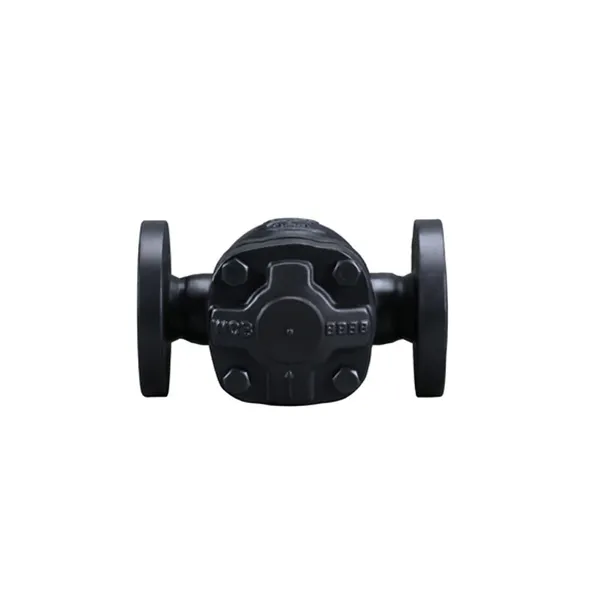
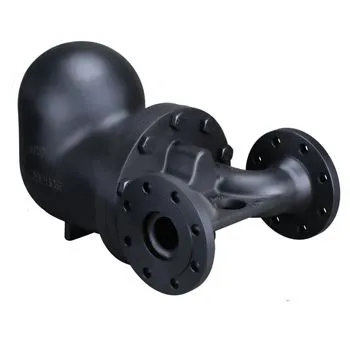
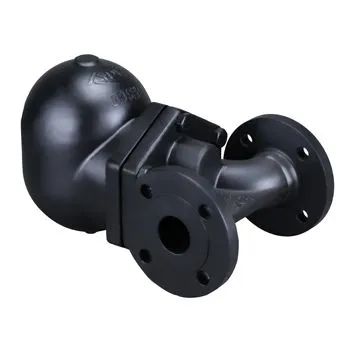
Best Choice: Float & Thermostatic (F&T) Traps.
Why:
Continuous discharge: F&T traps modulate with the condensing rate, discharging condensate continuously and preventing waterlogging.
Excellent air venting: The built-in thermostatic air vent removes air and non-condensable gases at start-up, allowing steam to enter the system quickly.
Fast response: They respond immediately to load and pressure changes — ideal for processes with modulating control valves.
Evidence of superiority: A tyre plant reduced steam consumption per batch from 17.9 kg to 14.8 kg after replacing inverted bucket traps with F&T traps. A batch reactor reached target temperature in 31 minutes instead of 37 minutes while using 27% less steam.
Special Cases:
Two-orifice F&T traps handle high start-up loads (2–3 times running load) common in batch processes. The float opens one orifice at low load and both orifices at high load.
Steam-operated pumping traps are essential when backpressure exceeds supply pressure (“stall” conditions). In a bottle washer example, replacing a standard F&T trap with a pump-trap eliminated 1,560 kg/day of steam loss through bypass.
Avoid:
Inverted Bucket Traps for process applications — they operate intermittently, cause condensate accumulation, hamper heat transfer, and consume steam to operate.
Thermodynamic Traps — intermittent blast discharge and poor air venting make them unsuitable.
Tracing Applications
What it is: Using small-bore steam tubing to maintain product temperatures, prevent freezing, or reduce viscosity. Condensate loads are low, and traps are spaced frequently.
Best Choice: Depends on criticality.
| Application Type | Best Trap | Why |
|---|---|---|
| Critical Tracing (no condensate back-up permitted) | Thermodynamic | Compact, wide pressure range, freeze-resistant, no condensate back-up |
| Non-Critical Tracing (back-up acceptable) | Thermostatic (Bimetallic or Balanced Pressure) | Allow sub-cooling to use sensible heat, improving energy efficiency; freeze-resistant |
Considerations: Thermostatic traps discharge condensate below steam temperature, utilizing some sensible heat — reducing steam consumption.
Quick Selection Reference Table
| Application | Primary Choice | Secondary Options | Key Avoid |
|---|---|---|---|
| Steam Mains / Drip | Thermodynamic (above 30 psig) | Inverted Bucket, Thermostatic | F&T (narrow pressure range, freeze risk) |
| Process / Heat Transfer | Float & Thermostatic | Pumping Trap (if stalling) | Inverted Bucket, Thermodynamic |
| Tracing — Critical | Thermodynamic | — | Thermostatic (back-up not permitted) |
| Tracing — Non-Critical | Thermostatic (Bimetallic/Balanced) | — | — |
| Unit Heaters | F&T or Inverted Bucket (constant pressure) | Thermodynamic (variable pressure) | — |
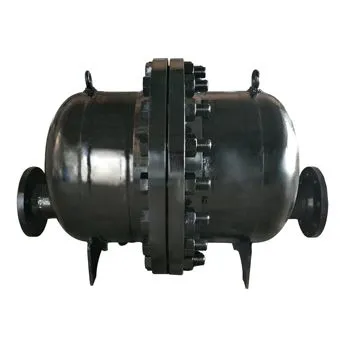
| Separators | F&T | Thermostatic, Inverted Bucket | — |
Five Essential Selection Criteria
Beyond application type, consider these factors:
Condensate Load: Accurately calculate the maximum condensate load and apply a safety factor:
F&T: 1.5–2.5
Inverted Bucket: 2–4
Thermostatic: 2–4
Thermodynamic: 1–1.2
Pressure and Backpressure: The trap must operate across the full pressure range — particularly at minimum differential pressure (when control valves throttle).
Air Venting: Process applications need rapid start-up air removal. F&T and thermostatic traps excel; thermodynamic and inverted bucket traps do not.
Dirt and Debris: Inverted bucket traps handle dirt best due to top discharge. Thermodynamic traps handle moderate dirt. F&T traps are susceptible to blockage. Always install a strainer upstream.
Failure Mode: Know how the trap fails:
F&T: Closed (safe, but waterlogs)
Inverted Bucket & Thermodynamic: Open (steam loss)
Thermostatic: Either (depends on design)
Installation Quick Reminder
F&T traps must be installed horizontally (float arm horizontal).
Thermodynamic traps should be installed horizontally for longest life, cap facing up.
Inverted bucket traps should be installed upright.
Always follow the flow arrow on the body. Install a strainer upstream and isolation valves for maintenance.
Conclusion
There is no single “best” steam trap — only the right trap for the right application.
| If you need… | Choose… |
|---|---|
| Continuous condensate removal for a process | Float & Thermostatic |
| Rugged drip drainage from steam mains | Thermodynamic (above 30 psig) or Inverted Bucket |
| Freeze-protected tracing with energy savings | Thermostatic |
| To solve stalling due to backpressure | Steam-Operated Pumping Trap |
When in doubt, consult your equipment manufacturer’s specifications or a qualified steam system specialist. A properly selected and installed steam trap will pay for itself many times over through energy savings, improved product quality, and reduced maintenance.
Have questions about your specific application? Drop them in the comments below.
Recently Posted
-
How to Choose the Right Steam Trap for Your Application
July 31, 2026IntroductionChoosing the correct steam trap is one of the most important decisions in designing or maintaining an efficient steam Read More
 -
Why Do Customers Still Buy Chinese Steam Traps?
July 31, 2026In today's global industrial market, buyers have access to some of the world's most recognized steam trap brands, includin Read More
 -
High-Quality Steam Traps from Qiaofa Machinery – Efficient and Durable Solutions
July 31, 2026Introduction to Steam Traps and Their ImportanceSteam traps are essential components in any steam system, serving the critical fun Read More
 -
Steam Trap Material Selection Guide: How to Choose the Right Material for Your Steam System
July 29, 2026IntroductionChoosing the correct steam trap material is just as important as selecting the right steam trap type. A steam trap ins Read More

Contact Us
Recommended Products
-
 Capsule-Type Steam Trap Forged SteelNegotiableMOQ: 1 Piece
 -
OEM Thermostatic Bellows Steam TrapNegotiableMOQ: 1 Piece
-
Bellows Steam Trap Manufacturer | Industrial Thermostatic Steam Traps SupplierNegotiableMOQ: 1 Piece
-
Industrial Thermostatic Steam Trap With Stainless Steel Bellows – ManufacturerNegotiableMOQ: 1 Piece
-
Thermostatic Bellows Steam Trap | Stainless Steel for Steam Tracing SystemsNegotiableMOQ: 1 Piece
-
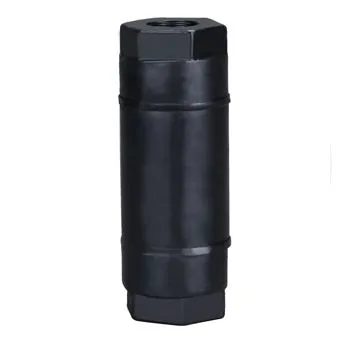
TD42 Thermodynamic Disc Steam Trap for RefineryNegotiableMOQ: 1 Piece
-
PN16–PN63 Disc Type Steam Trap | Threaded, Flanged & Socket Weld ConnectionsNegotiableMOQ: 1 Piece
-
TD42 Disc Type Steam Trap – Thermodynamic Steam Trap Manufacturer & Supplier in ChinaNegotiableMOQ: 1 Piece
-
TD42 Thermodynamic Disc Steam Trap for RefineryNegotiableMOQ: 1 Piece
-
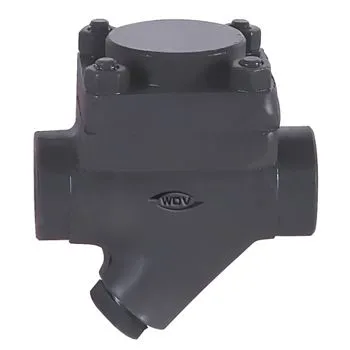
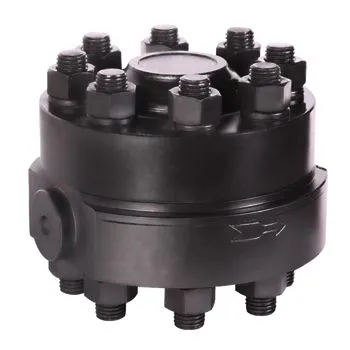
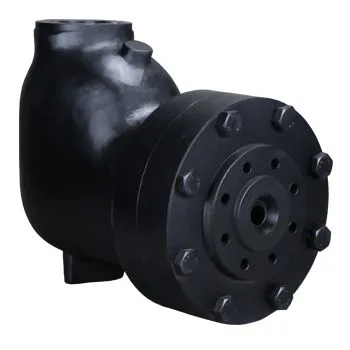
Lever Float Steam Trap Manufacturer in China | High Efficiency Steam TrapNegotiableMOQ: 1 Piece
-
Lever Float Steam Trap for Steam Heating SystemsNegotiableMOQ: 1 Piece
-
Stainless Steel Lever Float Steam Trap With Thermostatic Air VentNegotiableMOQ: 1 Piece
-
Industrial Lever Float Steam Trap for Heat ExchangersNegotiableMOQ: 1 Piece
-
PN16 PN25 PN40 Lever Float Steam Trap SupplierNegotiableMOQ: 1 Piece
-
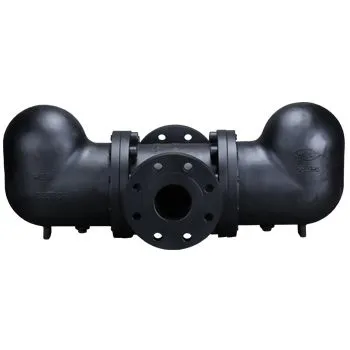
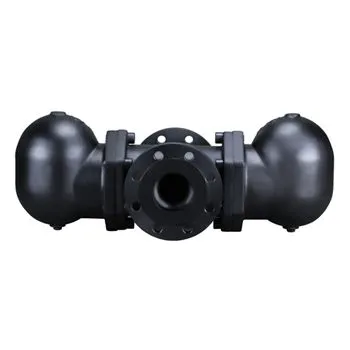
Heavy Duty Lever Float Steam Trap for Process Steam ApplicationsNegotiableMOQ: 1 Piece
-
Lever Float Steam Trap With Continuous Condensate DischargeNegotiableMOQ: 1 Piece
-
OEM Lever Float Steam Trap Factory With 45+ Years ExperienceNegotiableMOQ: 1 Piece
-
OEM Lever Float Steam Trap Factory With 45+ Years ExperienceNegotiableMOQ: 1 Piece
-
Flanged and Threaded Lever Float Steam Trap for Industrial BoilersNegotiableMOQ: 1 Piece
-
High Capacity Lever Float Steam Trap for Marine and Industrial ApplicationsNegotiableMOQ: 1 Piece